Where a Child Was Born, and Generations Learned to Remember
In Bethlehem, the sacred story begins with extraordinary humility. Not in a palace. Not among worldly riches. But in a setting remembered through the image of a manger.
Across centuries, this city became a destination of prayer, pilgrimage, and artistic expression. Its artisans learned to shape olive wood, polish mother-of-pearl, embroider cloth, and preserve sacred imagery through patient human hands. Every carving tells a story of knowledge entrusted from one generation to another.
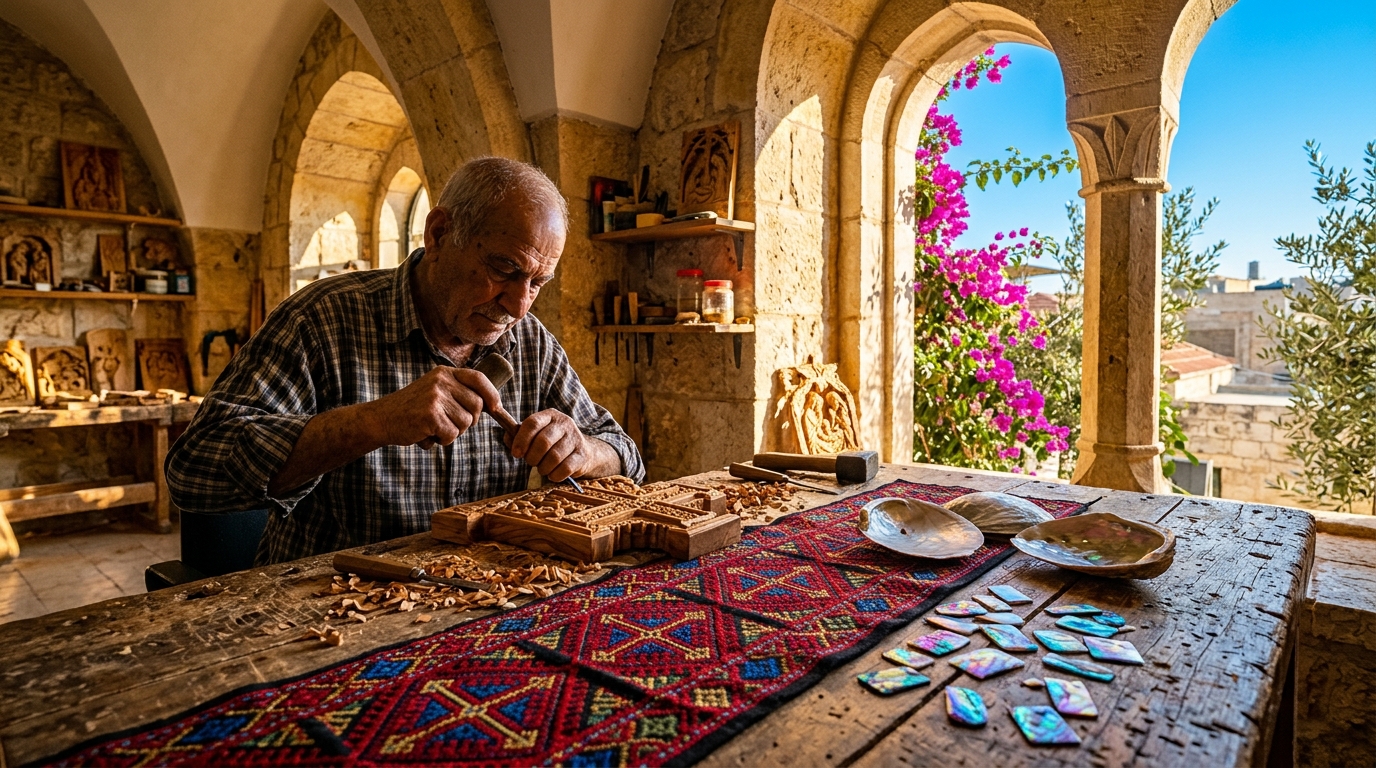
"A master woodcarver transforms pruned Holy Land olive wood into high-fidelity devotional objects, surrounded by iridescent mother-of-pearl and Palestinian Tatreez embroidery."
The Seven Chapters of Bethlehem's Memory
An illustrated chronicle exploring how two millennia of biblical history, monumental architecture, and Christian pilgrimage shaped Bethlehem's living craft culture.
The Birth That Changed the World
In Christian theology, Bethlehem occupies a singular spiritual threshold: the intersection of divine humility and human history. Long before it became synonymous with the Nativity narratives of Mary, Joseph, and the Christ child, the hillside settlement of Beit Lahm was associated with King David's youth and the pastoral narratives of the Hebrew Scriptures. In the Christian tradition, the arrival of Christ in a humble subterranean manger transformed Bethlehem into a sanctuary of peace, goodwill, and eternal remembrance.
"The Nativity establishes an enduring spiritual aesthetic: that the most sacred truths manifest not in imperial palaces, but through quiet humility, natural simplicity, and sheltering love."
From Sacred Memory to Monumental Architecture
Following Saint Helena's historic pilgrimage in 326 CE, Emperor Constantine commissioned the first monumental basilica over the Nativity grotto, consecrated in 339 CE. Rebuilt and fortified by Emperor Justinian in the 6th century, the Church of the Nativity survives today as one of the oldest continuously operating Christian basilicas in the world. Its Romanesque cloisters, Crusader column murals, and gilded Byzantine wall mosaics established a visual architectural language where stone, timber, and light express liturgical reverence.
"The stones of the Nativity basilica demonstrate how sacred memory was preserved through enduring craftsmanship, resisting centuries of earthquakes, conquests, and environmental wear."
The Pilgrims Who Carried Bethlehem Across Continents
With the arrival of the Franciscan Custody of the Holy Land in the 14th century, Bethlehem blossomed into a vital center of pilgrimage art. Travelers from Europe, the Levant, Ethiopia, and the Americas sought tangible physical reminders of their pilgrimage to the birthplace of Christ. Local artisan families in Bethlehem, Beit Sahour, and Beit Jala pioneered the craft of carving devotional keepsakes—intricately carved mother-of-pearl Jerusalem crosses, olive wood beads, and nativity relief plaques—allowing sacred memory to travel into distant churches and homes.
"Pilgrim art transformed localized holy topography into portable devotional anchors, connecting believers thousands of miles away directly to the Holy Land soil."
The Olive Tree and the Carver's Hand
The olive tree (Olea europaea) is deeply woven into the spiritual fabric of the Holy Land, symbolizing peace, endurance, and divine blessing. Trees in the Bethlehem groves can live for centuries, their dense, oily heartwood developing mesmerizing swirls of honey, amber, and deep chocolate grain. Bethlehem woodcarvers work exclusively with seasoned branches pruned during annual harvests or fallen timber. Using gouges, chisels, and hand files, carvers transform this organic grain into three-dimensional nativity figures, Jerusalem crosses, and prayer beads.
"The olive wood carver does not impose an arbitrary shape upon the wood; rather, the natural contours and annual rings of the living tree guide the chisel to reveal the sacred figure within."
Mother-of-Pearl: The Light Held Within a Shell
Introduced by Franciscan friars in the 16th century who trained local Christian artisans in the carving of iridescent marine nacre, Bethlehem's mother-of-pearl craft grew into a world-renowned artisanal mastery. Master shell carvers pierce, scribe, and polish natural mollusk shells, creating breathtaking three-dimensional models of the Church of the Nativity, the Last Supper, and delicate pectoral crosses that shimmer with prismatic rainbow iridescence under natural light.
"Mother-of-pearl captures the theological metaphor of divine radiance: an organic shell forged in ocean depths that reflects pure, multicolored light."
Women, Embroidery, and the Memory of Home
Parallel to the male woodcarving workshops, Bethlehem's women preserved an equally profound material culture through Tatreez (traditional Palestinian cross-stitch embroidery). Renowned for the ceremonial Bethlehem Malak (Queen's) dress, local needleworkers mastered intricate couching techniques using gilded and silk threads (Tahriri). Regional chest panels (Qubba) weave geometric motifs of cypress trees, stars, and moon amulets, encoding family lineages, geographic origin, and communal resilience in every stitch.
"Tatreez is not mere textile decoration; it is a tactile archive of female memory, geographical belonging, and generational dignity recognized by UNESCO."
The Hands That Keep Bethlehem Alive
Today, the historic artisan ateliers lining Star Street and the lanes of Beit Sahour face unprecedented structural challenges. Tourism disruptions, geopolitical volatility, and competition from imported synthetic resin replicas threaten this ancient artisan ecosystem. Preserving Bethlehem's sacred craftsmanship requires conscious international partnership: connecting American Christian communities and collectors directly to certified master workshops with verifiable provenance.
"When an authentic Bethlehem woodcarving is acquired, you are not merely purchasing an object—you are directly sustaining the living Christian and Palestinian families who keep the memory of the Nativity alive in its historic birthplace."
The Landscape of Bethlehem
Six landmark destinations connecting biblical narratives with historic stone architecture, pilgrimage paths, and material craft heritages.
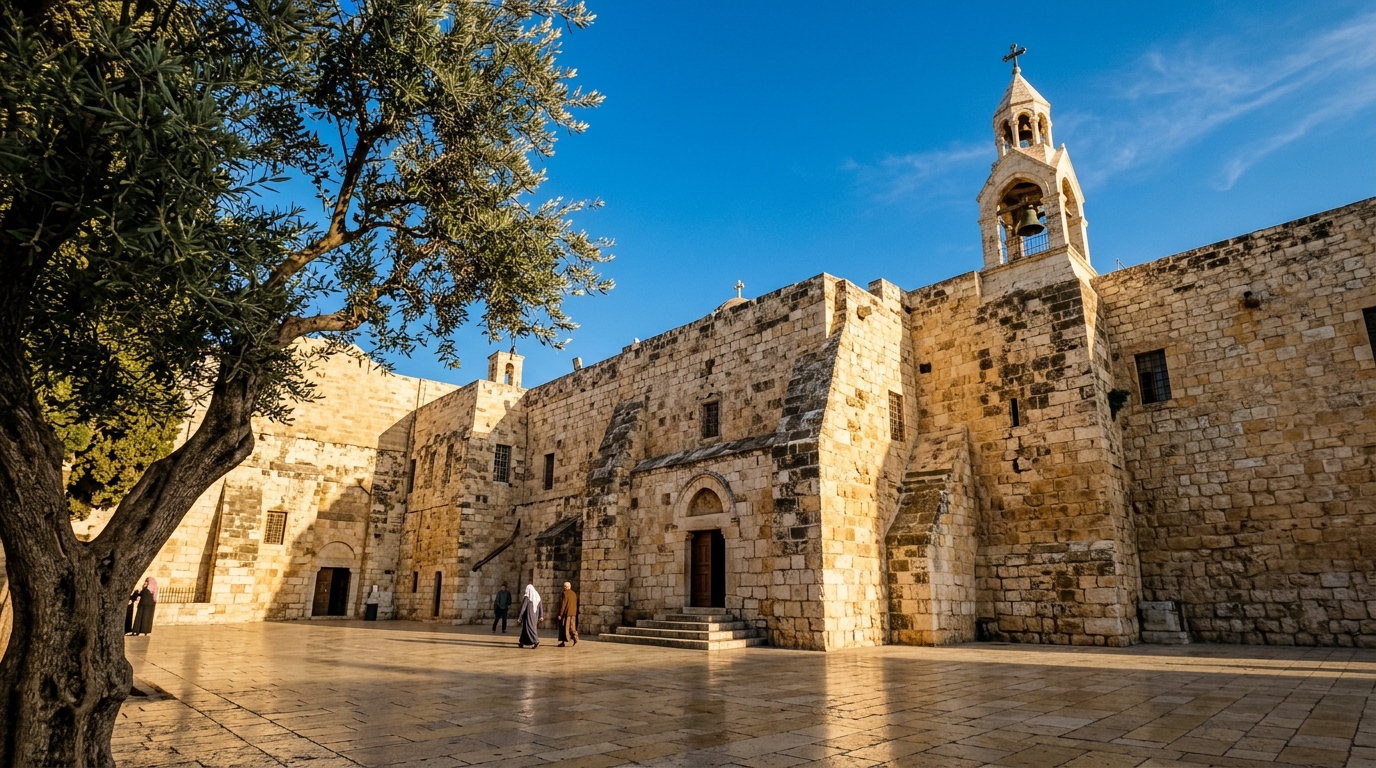
Church of the Nativity
The spiritual epicenter of Christmas. First commissioned by Constantine in 339 CE, this ancient stone basilica shelters the underground Grotto of the Nativity, where a 14-pointed silver star marks the traditional birthplace of Jesus Christ. Its Byzantine mosaics, Crusader murals, and polished limestone floor represent centuries of unified Christian prayer.
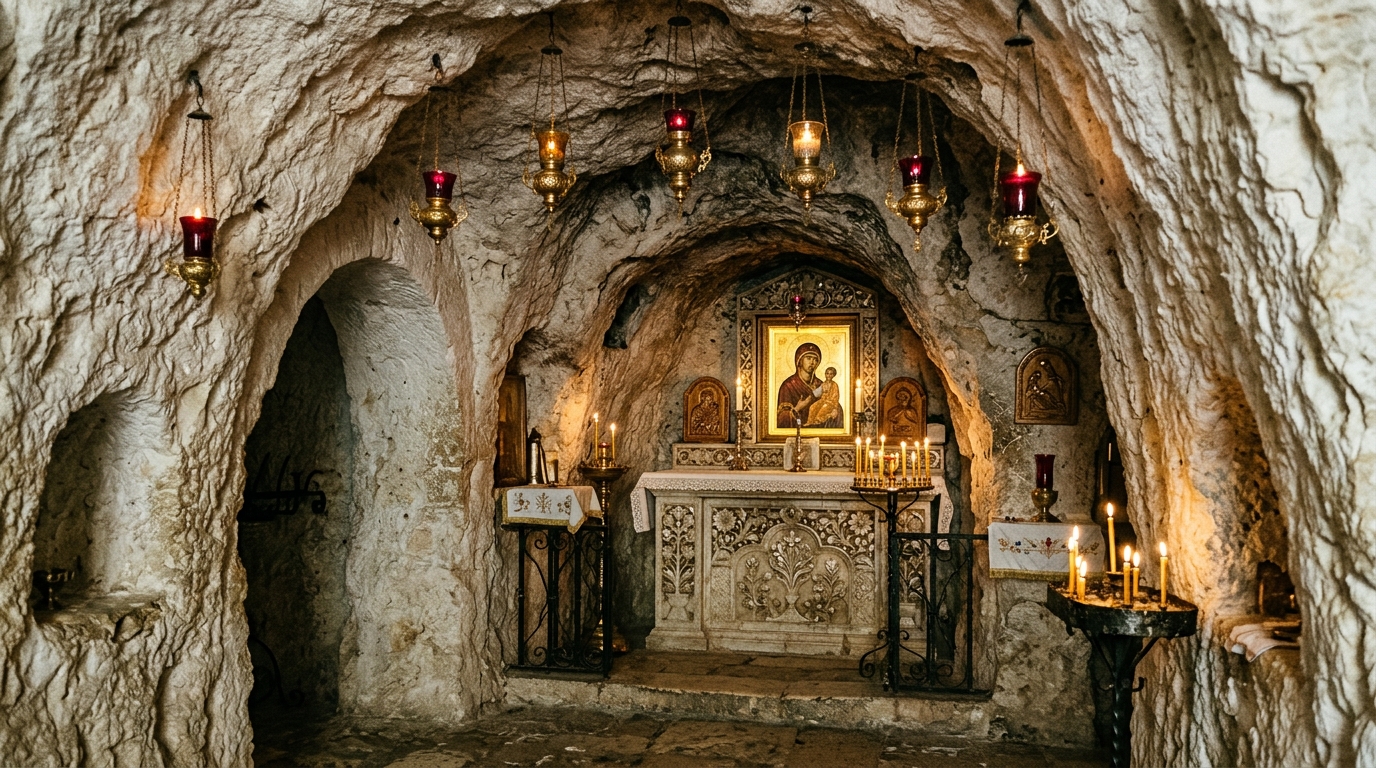
Milk Grotto Chapel
A peaceful subterranean limestone sanctuary just southeast of the Nativity Basilica. Tradition recounts that Mary and Joseph rested here with infant Jesus before the flight into Egypt, and a drop of mother's milk turned the dark cave limestone into pure chalky white. The shrine is a global pilgrimage site for prayers of family blessing, motherhood, and quiet contemplation.
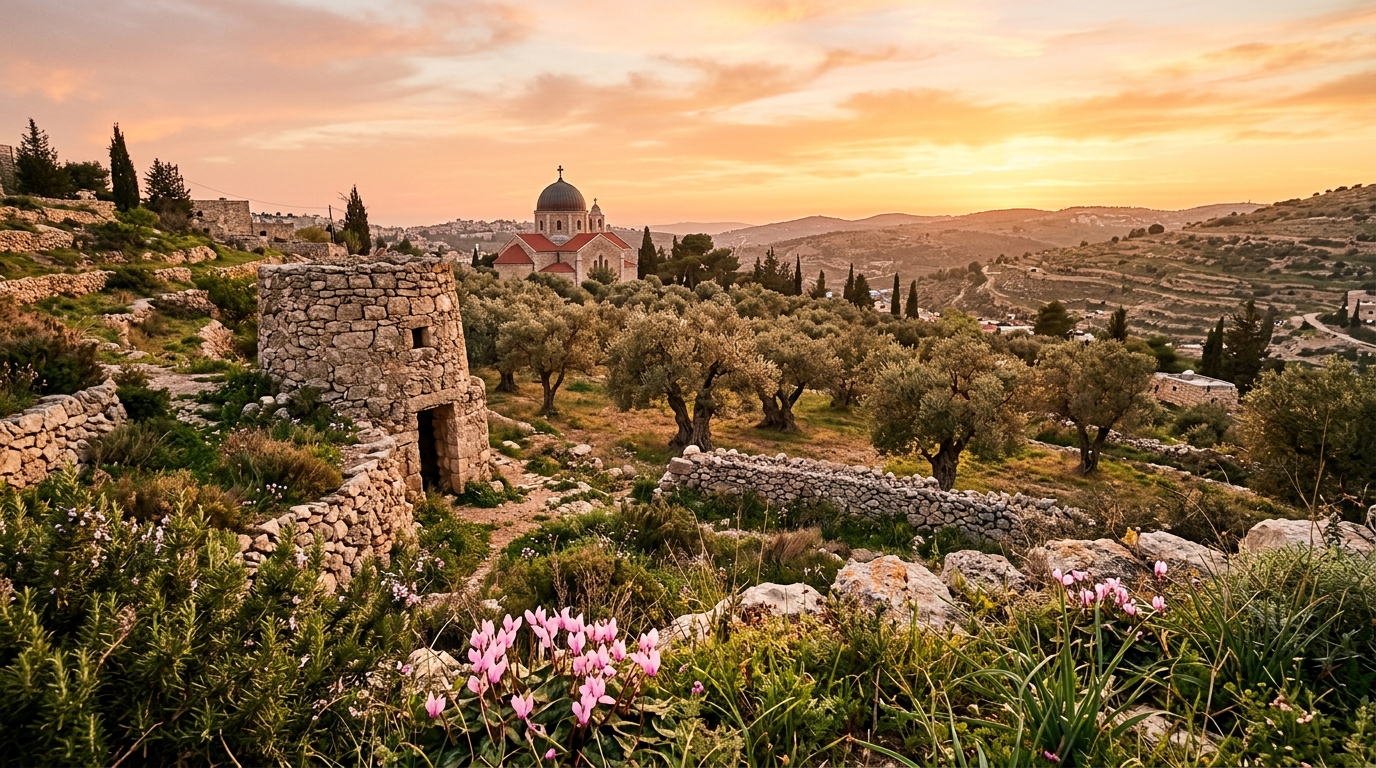
Shepherds' Field
The gentle terraced limestone hills of Beit Sahour where Christian scripture recounts angels announcing the birth of the Messiah to humble shepherds watching their flocks by night. Ancient gnarled olive groves, stone shepherd caves, and the tent-shaped sanctuary evoke the pastoral serenity of the first Christmas night.
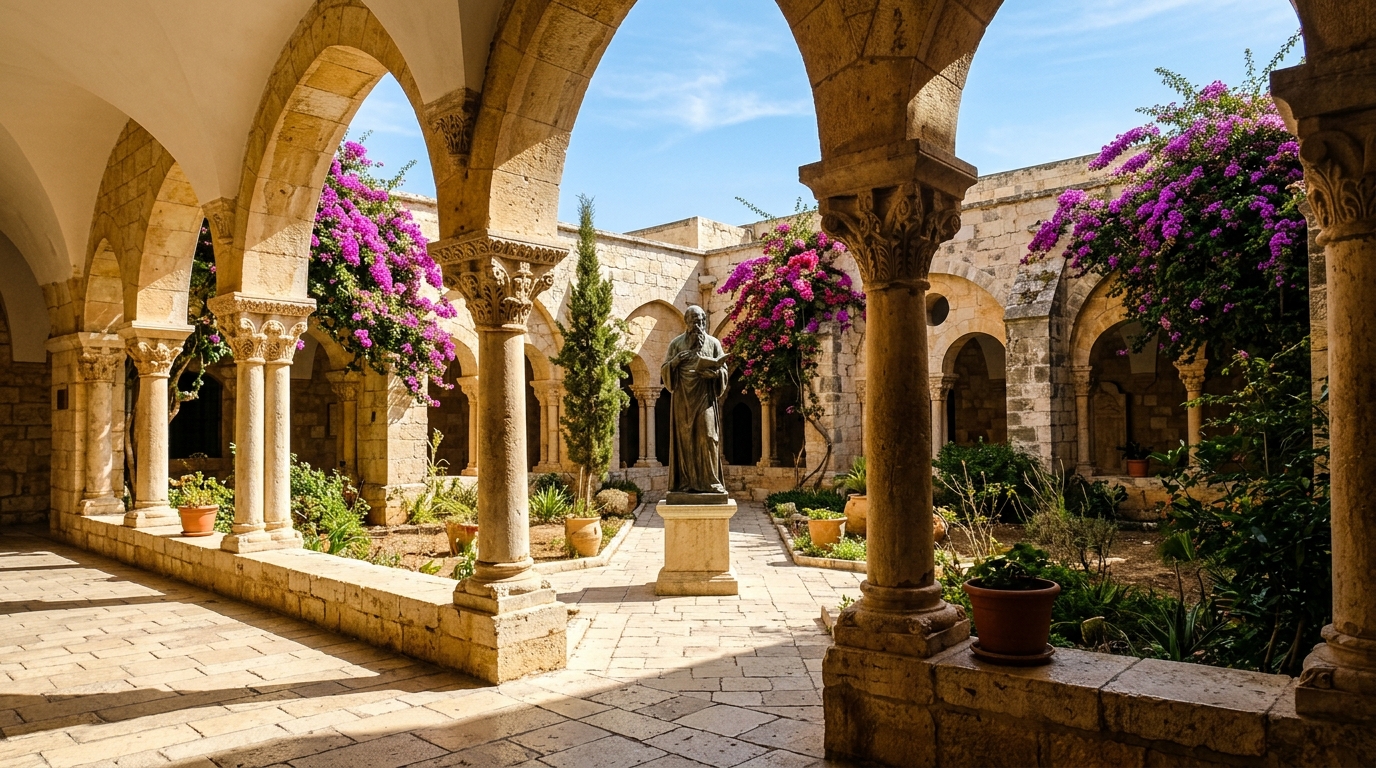
Church of St. Catherine
The Romanesque Latin Catholic church administered by the Franciscan Order, famous globally as the site of Bethlehem's televised Christmas Midnight Mass. Its medieval cloistered courtyard, carved stone capitals, and subterranean passage leading to Saint Jerome's translation cell anchor centuries of Western monastic scholarship.
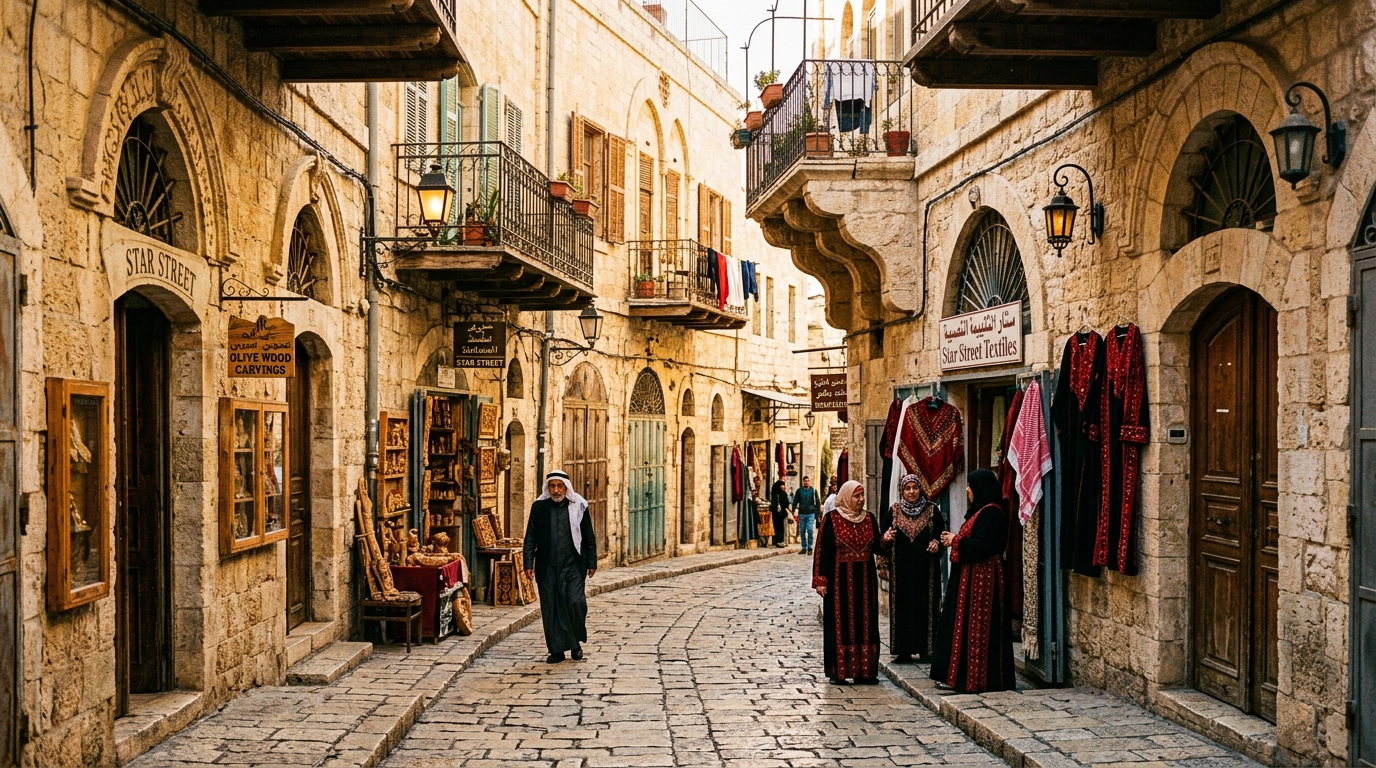
Star Street (Shari' al-Najma)
One of the oldest pilgrimage streets in Christendom, following the historic ceremonial entrance route used by patriarchs and pilgrims marching from Jerusalem to the Nativity. Lined with Ottoman and Crusader-era limestone dwellings, arched porticos, and family-owned olive wood and mother-of-pearl workshops.
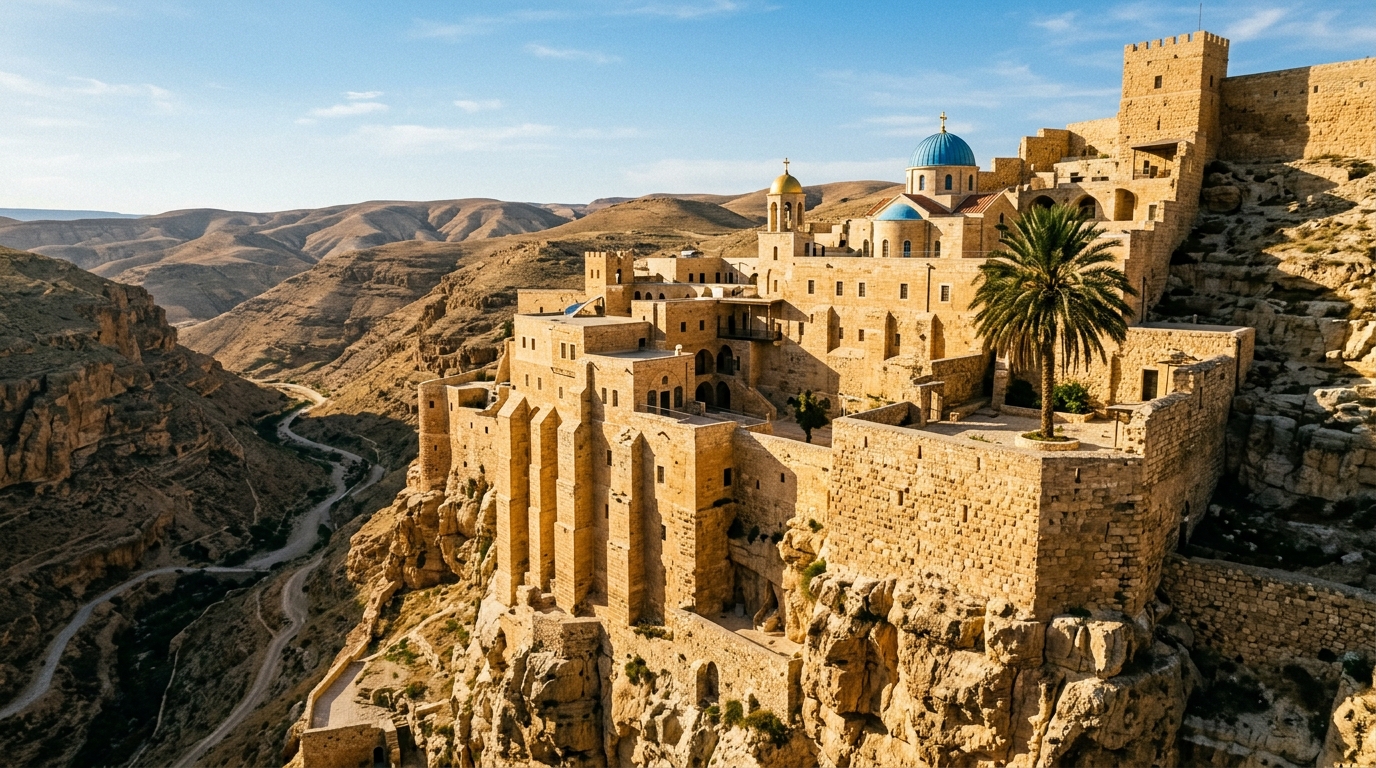
Mar Saba Monastery
Dating to 483 CE, this cliff-hanging Greek Orthodox desert fortress monastery clings to the vertical limestone walls of the Kidron Valley gorge. As one of the world's oldest continuously inhabited monasteries, Mar Saba preserves sacred manuscript culture, ascetic desert prayer, and ancient liturgical hymnody.
The Bethlehem Sacred Craft Library
Eight essential Holy Land craft categories rooted in Christian devotion, documenting the relationship between sacred keepsakes and everyday community heritage.
Olive Wood Nativity Carving
Carved with gouges from the distinctive honey-and-amber swirled grain of olive wood pruned from Holy Land groves. Each piece is unique, reflecting the natural contours and annual growth rings of the living tree.
Mother-of-Pearl Shell Carving
Meticulously pierced, etched, and polished by master shell carvers in Bethlehem and Beit Sahour. The iridescent nacre reflects vivid rainbow sheens (pink, turquoise, gold), symbolizing divine light held within an earthly shell.
Rosaries & Devotional Prayer Objects
Beads hand-turned from olive heartwood, smoothly tumbled and hand-strung with silver or durable cord. The natural wood absorbs natural skin oils over decades of prayer, darkening into a rich, lustrous patina.
Palestinian Tatreez Embroidery
Practiced across generations of Bethlehem women. Features classical regional geometric motifs (the Bethlehem Star, cypress trees, and Damascus rose) hand-stitched in rich crimson, cobalt, and metallic gold thread.
Sacred Architectural Miniatures
A pinnacle of Bethlehem wood and shell joinery. Miniature facades reproduce every dome, column, and archway of historic Holy Land sanctuaries, fitted with tiny hinged doors and inlaid mother-of-pearl altars.
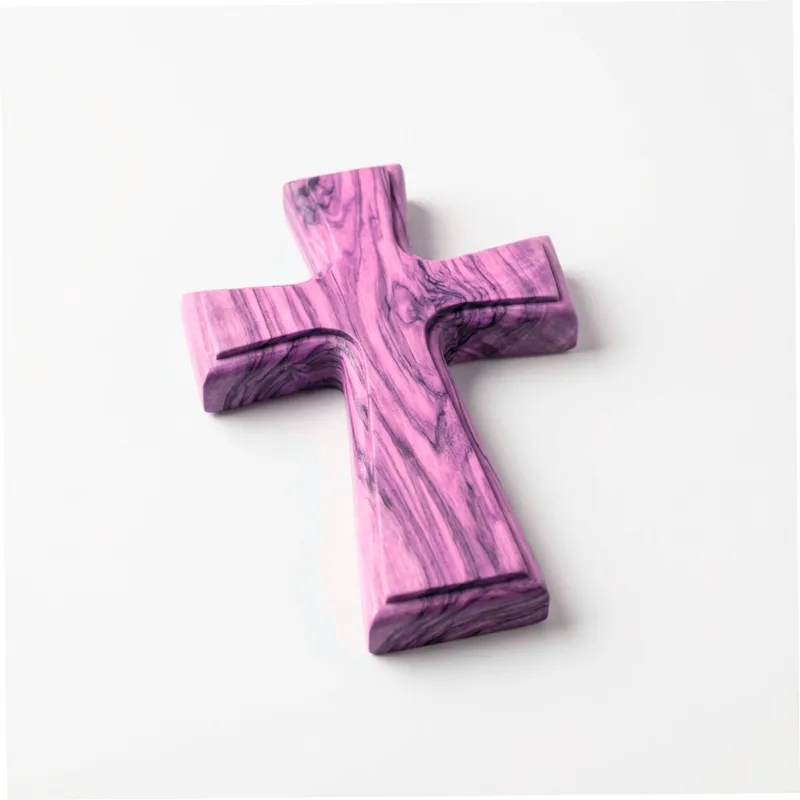
Decorative Keepsake Boxes & Inlay
Handcrafted from solid seasoned olive wood fitted with red velvet interior linings, brass hinges, and intricately inlaid geometric mother-of-pearl stars honoring the Nativity Star of Bethlehem.
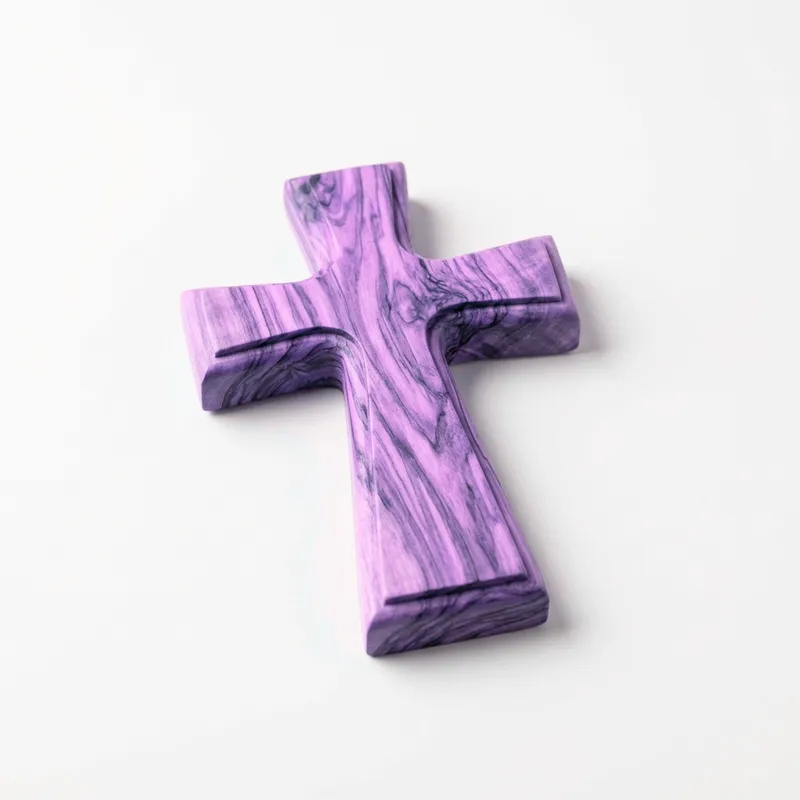
Crosses & Liturgical Woodcraft
Hand-chiseled crosses displaying the rich grain of Bethlehem olive wood, often inset with four holy elements (frankincense, Holy Land soil, olive leaves, and dried rose petals) or mother-of-pearl corpus reliefs.
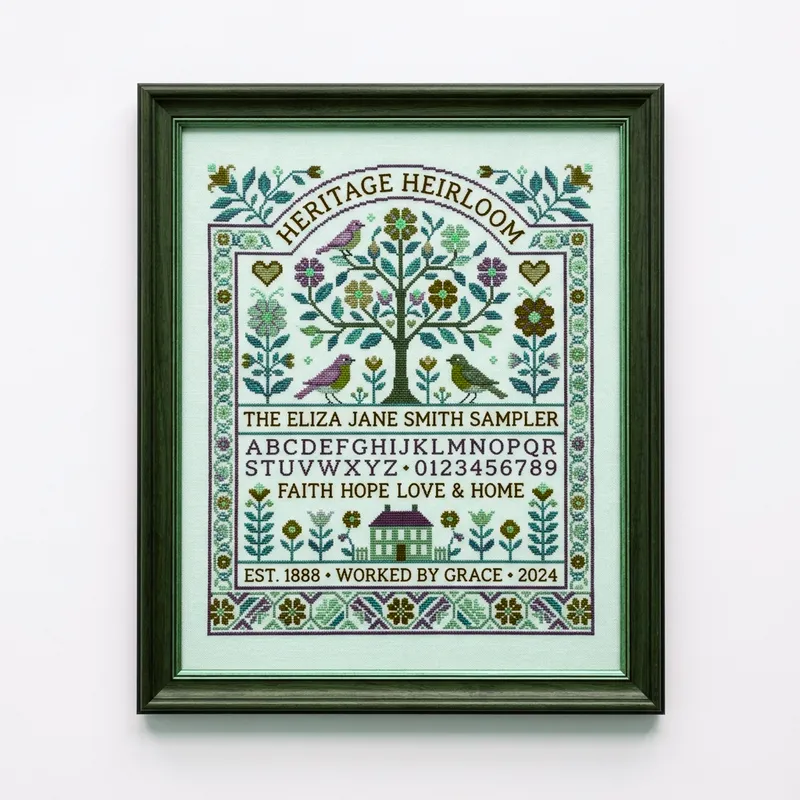
Christmas & Pilgrimage Heritage
Seasonal keepsakes hand-carved in Bethlehem workshops during the quiet winter months, bringing the authentic spiritual atmosphere of Manger Square directly to Christmas celebrations across the world.
The Olive Tree: A Living Material Biography
From the centuries-old groves of Beit Sahour to the master carver's workbench: tracing the ethical transformation of living timber into sacred objects.
The Living Tree
Rooted in the limestone soils of Bethlehem, Beit Sahour, and Beit Jala. Olive trees live for centuries, sustained through annual pruning that preserves tree vitality without ever felling a living grove.
The Seasoned Material
Harvested branch timber is seasoned naturally in workshop drying sheds for two to three years, stabilizing the dense, moisture-rich wood fibers to prevent future warping or splitting.
The Workshop Chisel
Master carvers inspect the natural grain swirls, knots, and honey-to-chocolate growth rings. Using hand gouges, files, and fine rasps, the artisan carves the form guided by the organic character of the wood.
The Sacred Form
Whether a kneeling shepherd, a peaceful Mary cradling the Christ child, or a 14-pointed Star of Bethlehem, the sacred subject takes shape through patient handwork and generational muscle memory.
The Finished Blessing
Each piece is hand-sanded with progressive fine grits, sealed with natural olive oil or beeswax to reveal deep amber luster, and attributed with verified Bethlehem workshop provenance documentation.
The Hands the Pilgrims Never Knew
For centuries pilgrims carried Bethlehem's sacred objects home without ever knowing who made them. We reverse that anonymity by documenting real master artisans.
Master Hanna Giacaman
"Every olive branch carries centuries of rain, sun, and prayer. When I carve a Nativity figure, I am not creating the shape—I am merely removing what hides the memory inside the wood."
Maryam Rishmawi
"Mother-of-pearl is unforgiving. If your pressure is uneven, the shell fractures. But when light hits the finished cross, it gleams with every color of the rainbow. That is the light of Bethlehem."
Suad Qumsieh
"Our grandmothers did not have books; they stitched our history into our dresses with silk thread. When I stitch the Star of Bethlehem, I am tying our children to this sacred soil."
Yousef Canawati
"A rosary must feel alive in the hand. The olive wood starts light, but after years of prayer, the oils of the person's hands darken it into golden mahogany. The rosary grows with their soul."
From Bethlehem to the American Home
Distinguishing 'Made in Bethlehem' from mass-market claims through verifiable product-level evidence and transparent chain of custody.
Maker Identified
Every creation is traced to a licensed, verified Christian artisan family or cooperative in Bethlehem, Beit Sahour, or Beit Jala, recording the master maker by name.
Materials Documented
Documenting that wood derives from authenticated pruning of local Olea europaea trees and genuine natural marine shell nacre, without synthetic composites.
Handwork Evidenced
Workshops document rough-cut carving, gouge detailing, sanding, and assembly with photo records, confirming authentic hand craftsmanship.
Object Classified
Clear distinction between open-catalog devotional objects, limited edition studio pieces, and custom liturgical church installations.
Provenance Checked
Each piece ships with a signed Certificate of Bethlehem Origin, detailing the workshop lineage, harvest location, and artisan signature.
U.S. Delivery Tracked
Exported through verified diplomatic trade channels, packaged in protective archival crates, and tracked directly to American homes and sanctuaries.
Creations of Bethlehem Devotion
Authentic Holy Land pieces handcrafted in family ateliers in Bethlehem and Beit Sahour, ready for acquisition or institutional chapel commission.
Olive Wood Bethlehem Cross
Hand-Carved Nativity Olive Wood Figurine Set
Jerusalem Olive Wood Rosary Beads
Olive Wood Rosary Keepsake Box
A Heritage That Cannot Survive
on Memory Alone
The artisan workshops of Bethlehem, Beit Sahour, and Beit Jala face real, pressing challenges: disruptions to regional tourism, economic isolation, volatile market access, and the competition of mass-produced plastic replicas. As highlighted in UNESCO's Living Hands preservation surveys, olive wood carving and mother-of-pearl inlay require active generational transmission to avoid extinction.
Direct Fair Trade
Eliminating predatory tourist middlemen so artisan families receive direct, dignifying compensation.
Apprenticeship Support
Funding master carvers to train young apprentices in traditional hand chiseling and shell inlay techniques.
Verified Provenance
Certifying real Holy Land olive wood and maker authenticity to protect buyers from synthetic counterfeits.
The Hands That
Still Remember
"Bethlehem gave the Christian world a sacred story remembered across centuries."
"That story traveled through scripture, prayer, pilgrimage, architecture, music, and art. And somewhere between the ancient olive groves and the narrow streets of the city, artisans began giving those memories a physical form."
"A cross shaped by hand. A Nativity carved from wood. A tiny figure placed inside a manger. Today, the responsibility is greater than preserving the object alone. It is to remember the hand, protect the knowledge, honor the origin, and ensure that the people who create this living heritage remain part of its future."